
Pampore Mongra Saffron: Identifying Grade-A All-Red Stigmas
MS
Mira Sengupta 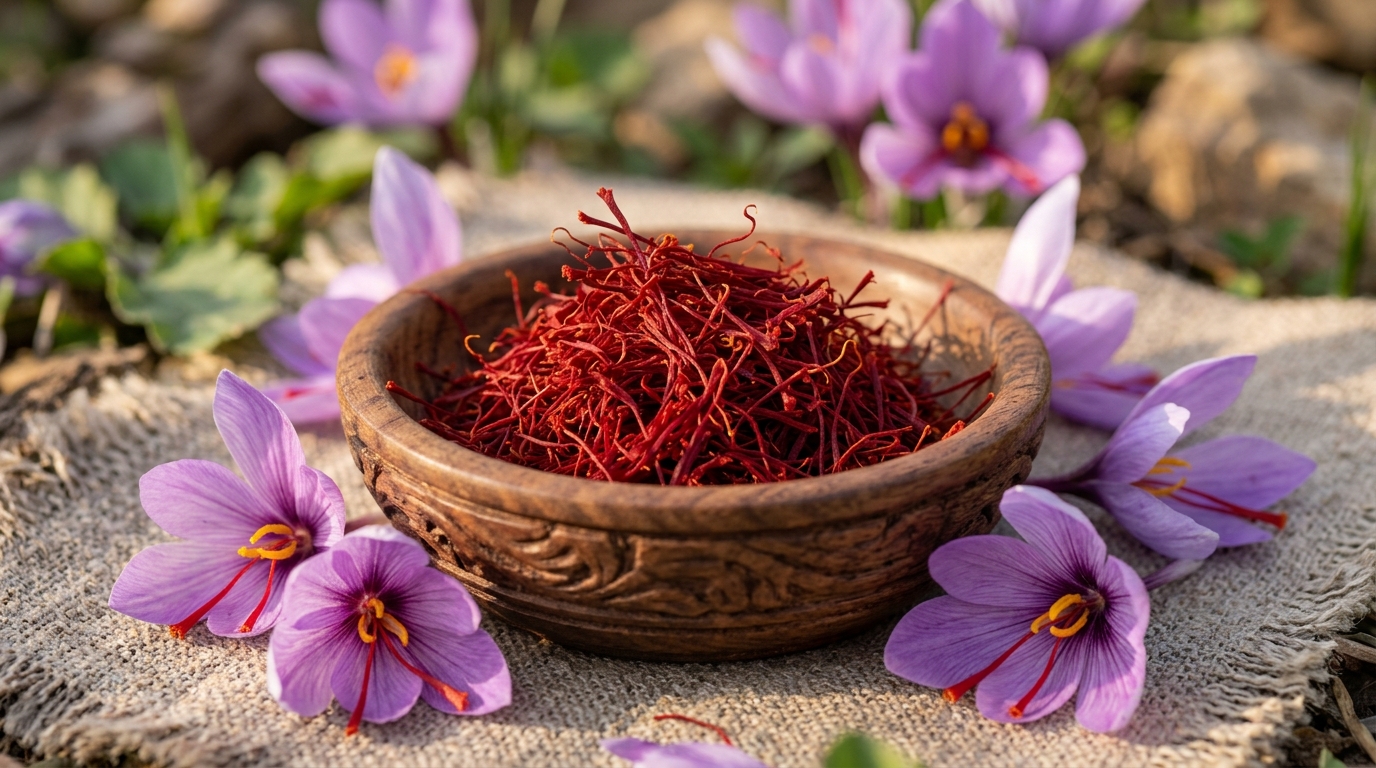
Avoid dyed corn silk and synthetic imitations. Simple warm-water tests to verify 100% genuine Kashmiri Mongra saffron.
Harvested by hand from the delicate purple blossoms of Crocus sativus across the historic Karewa plateau of Pampore, Kashmir, authentic Mongra Saffron consists exclusively of the deep crimson stigma tips without the pale yellow floral style.
The Active Chemical Trio
True Grade-A Kashmiri saffron is prized worldwide for three distinct bioactive compounds:
- Crocin (Color): Imparts a rich, luminescent golden-amber hue to culinary dishes and warm milk.
- Picrocrocin (Flavor): Delivers saffron’s characteristic warm, pleasantly bitter herbal taste.
- Safranal (Aroma): Responsible for the heady, sweet hay-like fragrance that permeates upon opening an airtight container.
How to Test for Genuine Saffron
- Slow Color Release: Drop 2 to 3 threads into a bowl of warm water or milk. Pure saffron takes 10 to 15 minutes to slowly infuse a golden-yellow hue. Artificial saffron dyed with chemical colorants turns the liquid bright red within seconds.
- Thread Resilience: Authentic threads maintain their dark crimson color and remain intact and elastic even after soaking. Imitation threads made from dyed corn silk disintegrate or turn white.
- The Baking Soda Test: Add a pinch of baking soda to saffron water. Genuine saffron remains yellow-amber, while adulterated saffron shifts to murky red.