
Raw Forest Honey vs Commercial Honey: The Unfiltered Truth
DR
Devraj Rawat 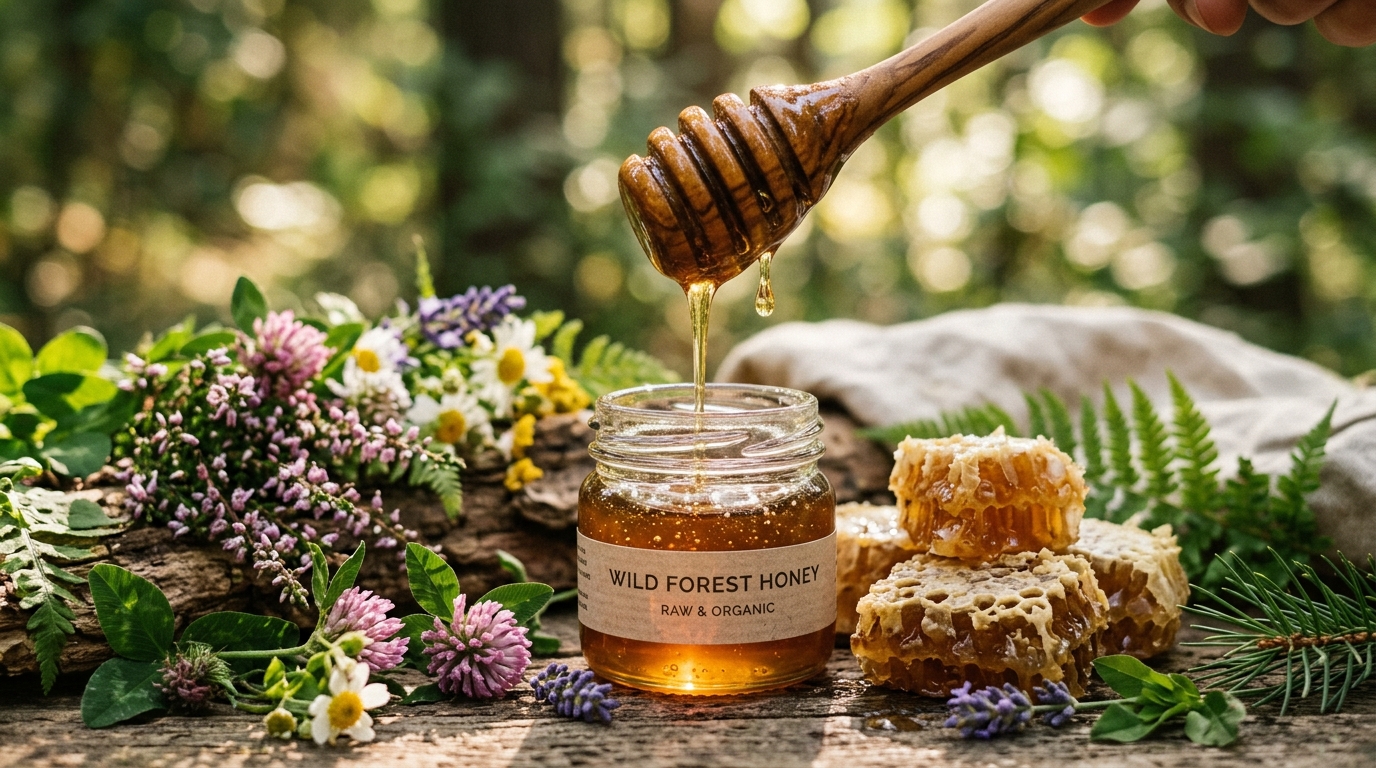
Pasteurization strips honey of active pollen, beneficial enzymes, and healing antioxidants. Here is how authentic forest honey is ethically harvested.
Supermarket honeys are frequently ultra-filtered and pasteurized at high heat exceeding 70°C. While this industrial heating prolongs shelf stability and prevents sugar crystallization, it permanently denatures fragile diastase and invertase enzymes while stripping beneficial floral pollen.
Living Food vs. Invert Syrup
Pure raw honey harvested ethically from single-origin reserves along the Western Ghats remains biologically active:
- Active Propolis & Pinocembrin: Natural bio-flavonoids known for antimicrobial and throat-soothing qualities.
- Microbial Invertase: Natural enzymes that break complex carbohydrates into readily absorbed natural sugars without spikes.
- Natural Crystallization: Real raw honey turns cloudy and thick over several months at cooler room temperatures—a definitive hallmark of pure honey free from corn syrup dilution.
3 Simple Authenticity Tests You Can Perform at Home
- The Water Gravitation Test: Drop a spoonful of honey into a glass of cool water. Pure, dense raw honey sinks straight to the bottom without swirling or dissolving immediately.
- The Thumb Viscosity Test: Place a small droplet on your thumbnail. Genuine honey stays in a rounded mound and does not run off quickly.
- The Clean Flame Test: Dip a dry cotton wick or wooden match into the honey and attempt to light it. Pure honey has low moisture content and will still allow the flame to catch.